The term eSIM stands for Embedded Subscriber Identity Module.
It is essentially a programmable chip integrated into your device that securely stores carrier profiles.
Instead of replacing SIM cards when switching networks, eSIM technology allows you to download a new carrier profile directly to your phone.
Key characteristics of eSIM technology include:
- Remote activation through QR codes
- Support for multiple carrier profiles
- Secure encrypted authentication
- No physical SIM card required
This flexibility is why many modern smartphones now support both physical SIM and eSIM simultaneously, enabling dual-SIM functionality.
How eSIM Works ?
eSIM works using a technology called Remote SIM Provisioning, which allows mobile operators to remotely install carrier profiles onto compatible devices.
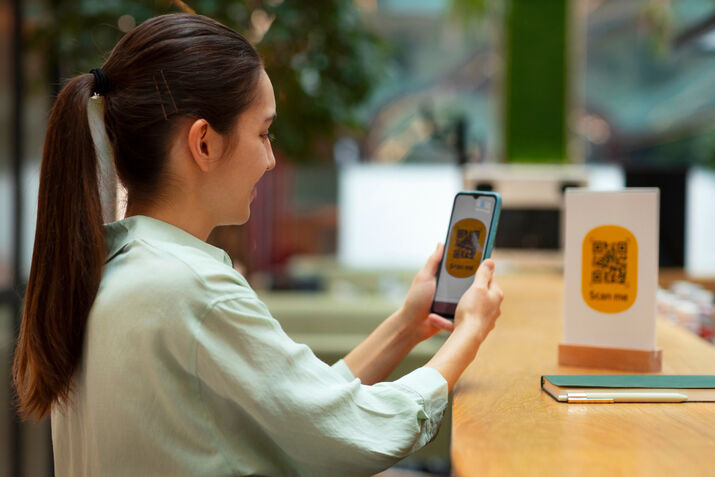
When you purchase an eSIM plan, the provider sends a QR activation code. After scanning the code, your phone downloads the network profile directly to the embedded SIM chip.
Here is the typical process in Step:
1: Purchase an eSIM Plan:- Buy a data plan from an eSIM provider.
2: Receive a QR Code:- The provider sends an activation QR code via email or dashboard.
3: Scan the QR Code:- Go to your phone’s cellular settings and scan the code.
4: Download the Network Profile:- Your phone installs the carrier profile onto the embedded SIM chip.
5: Activate Mobile Data: Once activated, your phone automatically connects to the available network.
The process usually takes less than two minutes.
eSIM vs Physical SIM Card
Understanding the difference between an eSIM and a traditional SIM card helps explain why the technology is growing so quickly.
| Feature | eSIM | Physical SIM |
| Activation | Digital QR code | Insert plastic card |
| Network switching | Instant profile download | Replace SIM card |
| Travel convenience | Works across multiple countries | Often limited to one carrier |
| Security | Embedded and encrypted | Can be removed or lost |
| Setup time | Minutes | May require store visit |
Because eSIMs eliminate the need for physical cards, they are particularly useful for international travelers.
Phones That Support eSIM
Most modern smartphones now support eSIM technology. Popular devices include models from major brands such as:
- Apple
- Samsung
- Google Pixel
Examples of compatible phones include:
- iPhone XR and newer
- Samsung Galaxy S20 and newer
- Google Pixel 3 and newer
Many tablets, smartwatches, and laptops also support eSIM connectivity. Before purchasing a plan, it’s always recommended to check whether your device supports eSIM activation.
Benefits of eSIM Technology
eSIM technology offers several advantages compared to traditional SIM cards.
1. Instant Activation:- You can activate a mobile plan instantly by scanning a QR code without visiting a store.
2. Multiple Network Profiles:- Devices can store multiple eSIM profiles, allowing users to switch networks easily.
3. Better Security:- Because the SIM is embedded in the device, it cannot be physically removed if the phone is lost or stolen.
4. Dual SIM Functionality:- Many devices allow you to use a physical SIM and eSIM together, making it easy to manage personal and travel numbers.
5. Eco-Friendly:- eSIM eliminates plastic SIM cards and packaging, reducing electronic waste.
Why Travelers Use eSIM
eSIM has become especially popular among international travelers.
Instead of searching for SIM cards at airports or paying expensive roaming charges, travelers can simply activate a digital plan before departure.
Benefits for travelers include:
- Avoid roaming charges
- Activate data before landing
- Use one plan across multiple countries
- No need to swap SIM cards
This makes eSIM ideal for:
- business travelers
- digital nomads
- remote workers
- frequent tourists
eSIM for International Travel
A travel eSIM allows users to access mobile data in multiple countries without changing SIM cards.
Travelers can purchase regional or global plans and stay connected across different destinations.
For example, Roam Communication provides travel eSIM plans covering 190+ countries, allowing users to activate data instantly and avoid expensive international roaming.
Instead of paying roaming fees from your home carrier, travelers can simply switch to a travel eSIM plan when they arrive at their destination.
How to Activate a Travel eSIM
Activating a travel eSIM is simple.
Follow these steps:
- Purchase an eSIM plan from your provider
- Receive your QR activation code
- Open your phone’s mobile network settings
- Scan the QR code to install the plan
- Enable mobile data when you arrive at your destination
Once activated, your phone will automatically connect to local partner networks.
Is eSIM the Future of Mobile Connectivity?
Many telecom experts believe eSIM technology will gradually replace physical SIM cards.
The adoption is increasing rapidly because major smartphone manufacturers are integrating embedded SIM chips directly into devices.
As more networks support remote provisioning, switching carriers will become easier and faster.
This shift is expected to make global connectivity more flexible, particularly for travelers and remote workers.
FAQ
1. What is an eSIM?
An eSIM (embedded SIM) is a digital SIM card built into a smartphone or device that allows users to activate a mobile network plan without inserting a physical SIM card. Instead of swapping SIM cards, users download a carrier profile directly to the device.
2. How does an eSIM work?
An eSIM works by downloading a carrier profile onto the device’s embedded SIM chip. After purchasing a plan, users scan a QR code or install a profile from their provider, allowing the phone to connect to the network instantly.
3. Is eSIM safe to use?
Yes. eSIM uses encrypted carrier profiles and secure authentication, making it difficult for unauthorized users to tamper with the SIM.
Final Thoughts
eSIM technology is transforming the way people connect to mobile networks.
By removing the need for physical SIM cards, it allows users to activate data plans instantly, switch networks easily, and stay connected across multiple countries.
For international travelers eSIM provides a convenient alternative to traditional roaming and local SIM cards.
As adoption continues to grow, eSIM is likely to become the standard method of mobile connectivity worldwide.